

- Quick Answer (TL;DR)
The best dumpster size for fall cleanup depends on both how much debris you have and what you are throwing away. A smaller fall home cleanup or garage decluttering project may fit comfortably in a 14-yard dumpster, while larger property cleanups, bulky household junk, landscaping projects, or combined indoor-and-outdoor cleanouts may require a 20-, 25-, 30-, or even 40-yard container. Weight matters too: leaves and furniture fill space differently than dirt, sod, roofing material, or renovation debris. Pack Mule currently offers standard 14-, 20-, 25-, 30-, and 40-yard roll-off dumpsters, plus a separate 15-yard container for qualifying clean-concrete loads.
Ready to plan your cleanup? Start with Pack Mule Dumpsters to find the right container for your project.
Why Choosing a Fall Cleanup Dumpster Can Be Harder Than It Looks
A few leaf piles beside the driveway may not look like much. Neither does a stack of broken patio furniture, several shrubs, boxes from the garage, or debris from one last home project before winter.
Then cleanup day arrives.
Everything gets pulled out at once, and suddenly the pile is considerably larger than expected.
That is one reason choosing a dumpster size for fall cleanup can be confusing. Homeowners often try to judge the project by looking at the debris before it has been gathered together. But loose branches take up awkward space. Furniture can be bulky. Garage items tend to uncover even more things that need to go. Landscaping debris can become surprisingly heavy.
The question is not simply, “What size dumpster do I need?”
A better question is:
How much material am I removing, how bulky is it, and how heavy will it become when everything is loaded?
Volume and Weight Are Two Different Problems
Consider two fall cleanup projects.
The first includes leaves, shrubs, branches, cardboard boxes, old patio chairs, and general garage clutter. These materials may consume a lot of dumpster space without being exceptionally dense.
The second includes sod, dirt, landscaping material, broken hardscape, or construction debris. The pile may appear smaller, but the load can become heavy much faster.
Pack Mule specifically recommends considering the volume, weight, and type of debris when selecting a container. Its standard dumpsters also have different included weight allowances, so choosing solely by physical size can overlook an important part of the rental.
“The right dumpster size can make a fall cleanup much easier. Start by looking at how much debris you have, what type of material you are removing, and how much space it will realistically take once everything is loaded.”
- — Todd Atkinson
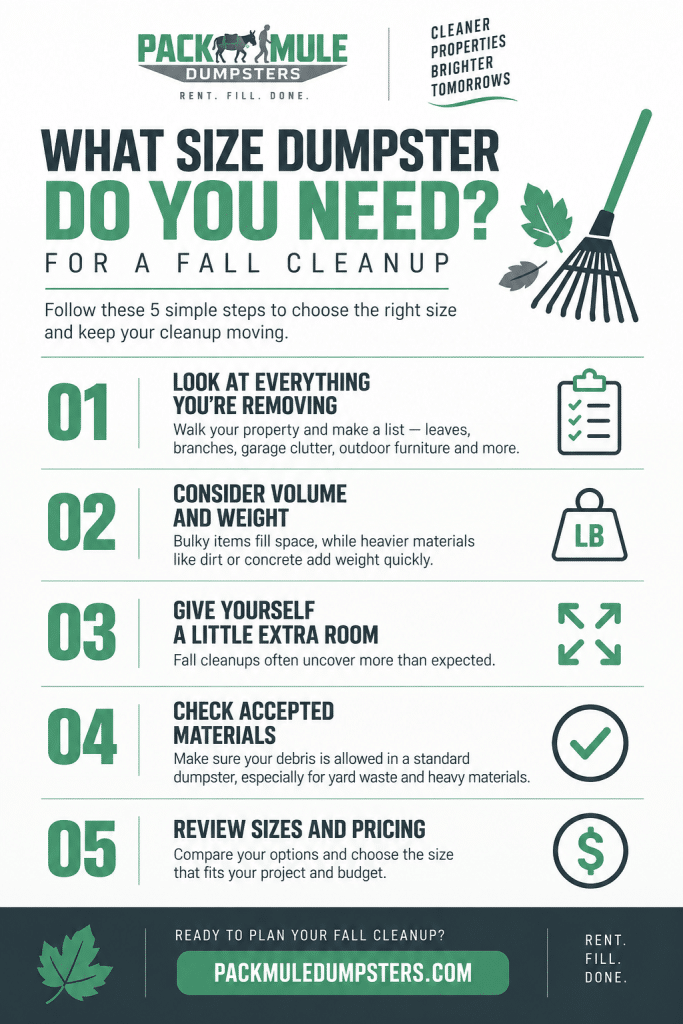
How to Choose a Dumpster Size for Fall Cleanup
Pack Mule’s current standard roll-off lineup includes 14-, 20-, 25-, 30-, and 40-yard dumpsters. Customers can compare dumpster sizes based on their cleanup scope before ordering.
14-Yard Dumpster: Smaller Cleanouts and Decluttering
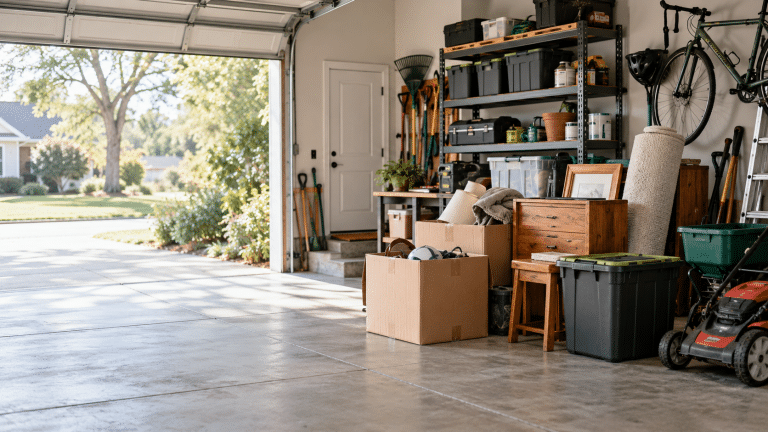
A 14-yard dumpster is a logical place to start for smaller residential projects such as garage decluttering and modest household cleanouts.
Pack Mule lists its 14-yard container at approximately 15 feet long, 7 feet wide, and 3.5 feet high, with 2,000 pounds of included disposal weight. The company specifically positions this size for small cleanouts and garage decluttering.
This size may make sense when your fall cleanup centers on one main area rather than the entire property.
20-Yard Dumpster: When the Project Starts Growing
A 20-yard dumpster gives you more vertical capacity without immediately jumping into one of the largest containers.
Pack Mule’s current 20-yard option measures about 15 feet long, 7 feet wide, and 5 feet high and includes 2,500 pounds of disposal weight. Pack Mule also uses this size for projects such as bathroom and kitchen remodeling.
For a fall cleanup, that added room can be useful when garage clutter, outdoor debris, bulky household items, and seasonal projects are happening at the same time.
25-Yard Dumpster: Medium and Multi-Area Cleanouts
A 25-yard dumpster can provide a useful middle ground for larger residential cleanups.
Pack Mule lists this size at approximately 17 feet long, 7 feet wide, and 6.5 feet high with 3,000 pounds of included weight and identifies it as an option for medium renovations and estate cleanouts.
Think beyond one room. If fall cleanup means clearing the garage, basement, backyard, shed, and accumulated household junk, moving into a larger container can provide needed breathing room.
30- and 40-Yard Dumpsters: Large Property and Bulky Cleanups
Major property cleanouts create a different problem: sheer volume.
The 30-yard dumpster carries a 5,000-pound included weight allowance in Pack Mule’s standard rental structure, while the 40-yard includes 6,000 pounds. Pack Mule describes its 40-yard container as suitable for major construction, large cleanouts, and bulky commercial debris.
A container this large may be more appropriate when you are clearing a substantial amount of bulky material or combining a large cleanout with renovation or property work.
Bigger, however, does not automatically mean better. The objective is to give the project enough capacity without paying for substantially more dumpster than the cleanup requires.
What About a 10-Yard Dumpster for Yard Cleanup?
A 10 yard dumpster for yard cleanup is a common search because smaller containers can make sense for limited debris volumes.
Pack Mule’s main current roll-off lineup begins at 14 yards. Its site separately lists smaller 6- and 10-yard containers as call-only options associated with Pack Llama Dumpsters.
That distinction matters when comparing available sizes online.
What Type of Fall Debris Are You Removing?
Fall yard cleanup may include tree limbs, brush, leaves, grass clippings, garden plants, shrub trimmings, mulch, or other landscaping material. Pack Mule’s yard-waste guidance currently lists many of these materials as commonly accepted, while also warning customers to ask before loading restricted materials.
Before assuming all outdoor debris can go together, review Pack Mule’s yard waste dumpster rental guidelines.
Heavy materials deserve extra attention. Dirt and sod, for example, can add weight quickly. Concrete, brick, hazardous chemicals, tires, and certain other materials may require different handling or may not belong in a standard yard-waste load.
Steps to Take Before Ordering Your Fall Cleanup Dumpster
- Walk the entire property first. Check the garage, basement, shed, yard, patio, landscaping beds, and other areas you plan to clean.
- Create one complete debris list. Include items you already know are leaving instead of sizing the dumpster around only the most visible pile.
- Separate bulky debris from heavy debris. Furniture and branches create a space problem; dirt and dense construction material can create a weight problem.
- Break down what you safely can. Cardboard, removable furniture pieces, and long branches may use less container space when reduced in size.
- Check material restrictions. Do not assume every outdoor or household item belongs in the same dumpster.
- Leave some breathing room. Fall cleanups have a habit of uncovering extra items once the garage, shed, or landscaping beds are opened up.
- Compare the total cost before ordering. Rental period, dumpster size, service address, weight allowance, and other charges can affect the final price. Review current dumpster rental pricing before booking.
When a Dumpster That Is Too Small Turns One Cleanup Into Two
Underestimating a fall cleanup does not usually become obvious when the dumpster arrives.
It becomes obvious halfway through the job.
The leaves are loaded. The brush goes in. Then the garage starts getting cleared. Someone remembers the broken patio set behind the shed. A few bulky items come out of the basement. Suddenly, the remaining dumpster space looks much smaller.
If the container fills before the property is cleared, work can stop or another haul may become necessary. Overfilling is not a good solution either. Material needs to remain within the container’s loading requirements.
The dumpster fills too soon
Leaves, brush, garage junk, patio furniture, and basement items can use more space than expected once the cleanup expands.
One cleanup can turn into two
If the container fills early, work may stop while another haul or dumpster is arranged before the property can be fully cleared.
Both size and weight matter
Too much capacity can waste money, while dense debris can add significant weight even when physical space remains.
Plan the entire cleanup first
Review every area, separate bulky items from dense materials, and leave room for the extra debris that often appears once work begins.
The opposite mistake creates a different problem. Renting substantially more capacity than the job requires can mean paying for dumpster space that never gets used.
Weight adds another layer. A container can have physical room remaining while still carrying a substantial amount of dense debris. That is why volume should never be the only factor considered.
Planning the complete cleanup before ordering helps prevent that snowball effect. Look at every area you plan to touch, identify the debris types, consider bulky items separately from dense materials, and account for the things you are likely to discover once work begins.
- Key Takeaway
- Choosing a dumpster size for fall cleanup starts with understanding both debris volume and weight.
- Smaller cleanouts may fit a 14-yard container, while larger, multi-area, renovation, or bulky cleanups may require a 20-, 25-, 30-, or 40-yard option.
- Heavy debris such as dirt or dense construction material should be evaluated differently from leaves, branches, furniture, and general clutter.
- Planning the full cleanup before ordering can help prevent overfilling, unused capacity, additional hauling, and project delays.
Make Fall Cleanup Easier With the Right Dumpster
Fall cleanup is much easier when debris has somewhere to go from the beginning.
Instead of building multiple piles and making repeated disposal trips, the right roll-off dumpster gives homeowners, landlords, contractors, and property managers one central place to load material as the project moves forward.
Pack Mule Dumpsters provides dumpster rental service throughout Southwest Ohio, including Dayton, Cincinnati, Springfield, Miamisburg, Springboro, and many surrounding communities. Its current service-area list also includes communities such as Centerville, Beavercreek, Kettering, Mason, West Chester, Hamilton, Lebanon, Troy, Xenia, and others across the Dayton-Cincinnati corridor.
Before your fall cleanup begins, estimate the entire job—not just the first pile you see. Then choose a container based on debris volume, material type, and expected weight.
Visit Pack Mule Dumpsters to compare your options and book the dumpster that fits your fall cleanup.
Frequently Asked Questions
What size dumpster do I need for a fall cleanup?
It depends on the volume and type of debris. Pack Mule’s 14-yard dumpster is positioned for smaller cleanouts and garage decluttering, while larger projects may require a 20-, 25-, 30-, or 40-yard container.
What size dumpster is good for a garage cleanout?
A 14-yard dumpster may work for a smaller garage decluttering project, while garages with bulky furniture, shelving, household junk, or debris from multiple areas may require more capacity. Evaluate everything being removed before choosing the size.
Can I put leaves and branches in a dumpster?
Pack Mule currently accepts common yard debris including branches, brush, leaves, grass clippings, garden waste, shrub trimmings, and several other organic materials under its yard-waste guidelines. Some materials are restricted, so check the load requirements before mixing debris types.
Should I rent a bigger dumpster than I think I need?
You do not necessarily need to jump to the largest dumpster, but leaving some extra capacity can be useful when the exact debris volume is uncertain. Compare the cost and capacity difference against the risk of running out of room halfway through the cleanup.
Does dumpster weight matter for fall yard cleanup?
Yes. Lightweight branches and leaves behave differently from dirt, sod, concrete, roofing debris, or other dense materials. Pack Mule advises customers to consider both volume and weight when selecting a dumpster, and its standard container sizes have different included weight allowances.